
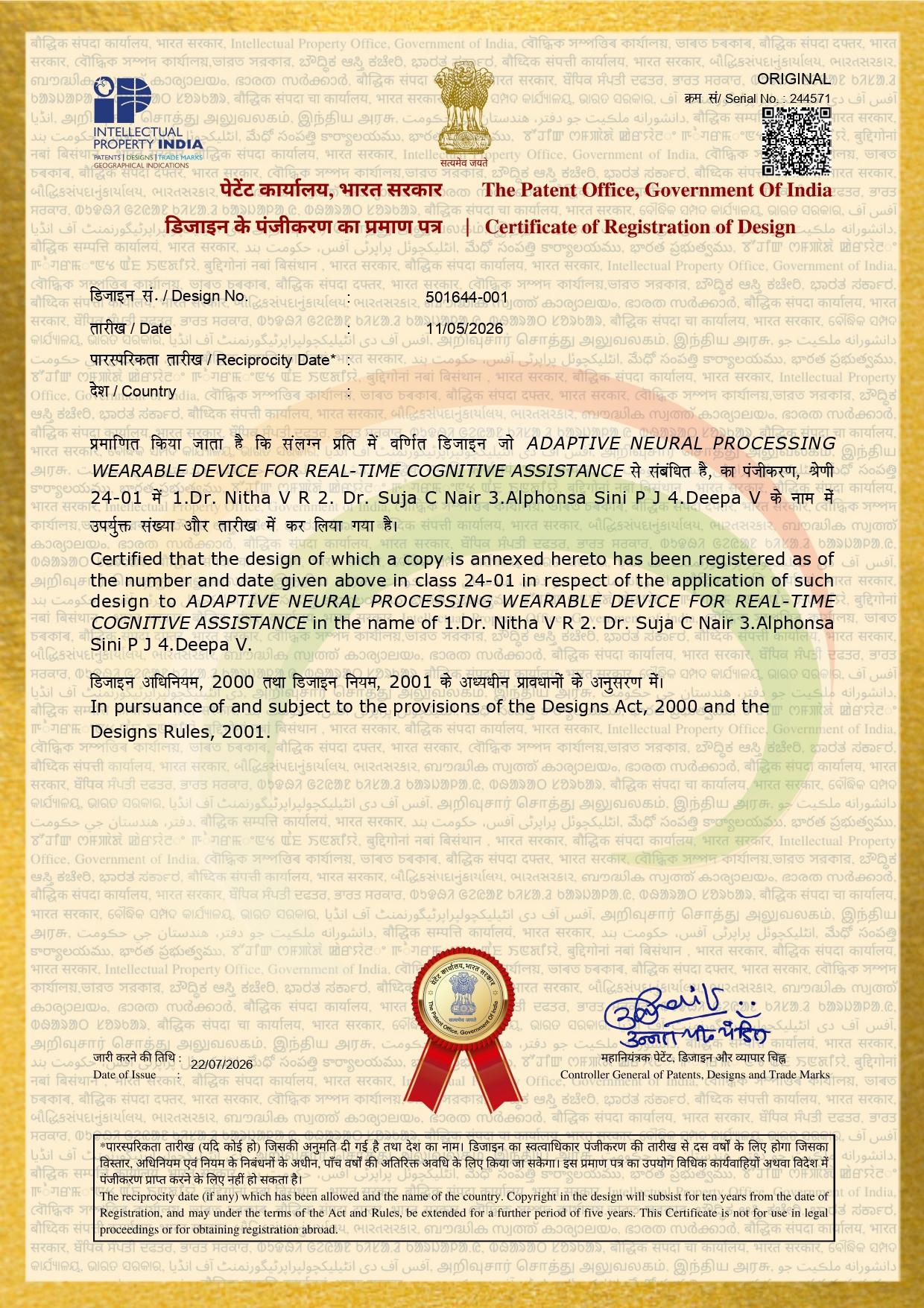
 Dr. Nitha V R, Assistant Professor in the Department of Computational Studies, STEM published a patent titled “Adaptive Neural Processing Wearable Device for Real Time Cognitive Assistance” (Application Number: 501644-001). The patent was published for a wearable device that supports everyday thinking tasks by adapting how it processes information to the needs and context of the user. It points toward more independent, accessible and personalised assistance in daily life.
Abstract
The Adaptive Neural Processing Wearable Device for Real Time Cognitive Assistance focuses on the development of a wearable technology designed to support cognitive activities through adaptive neural processing. The proposed device aims to facilitate real time cognitive assistance by adapting its processing mechanisms to the user’s needs and context. Such a system has potential applications in assistive technology, human computer interaction, cognitive support, and personalised wearable computing. By integrating adaptive processing capabilities into a wearable platform, the technology may contribute to improving accessibility, user independence, and the efficiency of everyday cognitive tasks.
Explanation of the Research
This research involves a wearable device intended to help people with cognitive tasks in their everyday lives. Similar to how a smartwatch provides information and alerts, this device is designed around the idea of adapting its processing to assist when required.
For example, a wearable cognitive assistance system could potentially help users remember tasks, follow instructions, receive timely reminders, or access relevant information while performing daily activities. Its adaptive processing approach aims to make assistance more responsive to the user’s requirements.
The broader goal is to explore how wearable technology can help people manage everyday tasks more independently and interact more effectively with their surroundings.
Practical Implementations
Potential applications of this wearable technology include:
- Cognitive assistance: Supporting reminders, task sequencing, and everyday activities, if these functions are part of the device’s implementation.
- Assistive technology: Exploring ways to support people who experience difficulties managing routine tasks.
- Healthcare and rehabilitation: Potential use as a supplementary tool in cognitive support and rehabilitation settings, subject to clinical validation.
- Education: Supporting task organisation and learning activities through personalised assistance.
- Human computer interaction: Investigating how wearable systems can deliver timely, context aware information with minimal user effort.
Practical implementation would require appropriate wearable hardware, adaptive processing software, a user friendly interface, and testing under real world conditions. If the system processes neural or other personal data, privacy, security, informed consent, and responsible data handling would also be essential.
Social Implications
The technology has potential social value in several areas:
- Improved independence: Wearable assistance may help users manage daily activities with less reliance on caregivers.
- Accessibility and inclusion: Adaptive technologies may create additional opportunities for people who face cognitive or functional challenges.
- Quality of life: Timely assistance could reduce the difficulty of managing complex routines and everyday responsibilities.
- Personalised support: Adaptive processing may enable assistance that better reflects individual needs and contexts.
- Ethical and privacy considerations: Wearable cognitive systems must protect sensitive information, respect user autonomy, and avoid excessive dependence on automated recommendations.
- Affordability and equitable access: Cost effective design and accessible interfaces are important to ensure that the benefits reach diverse communities.
Overall significance: The design represents an area of wearable technology with potential applications in cognitive assistance, accessibility, and human computer interaction. Its actual impact will depend on its implemented features, usability, safety, affordability, and evidence of effectiveness.