
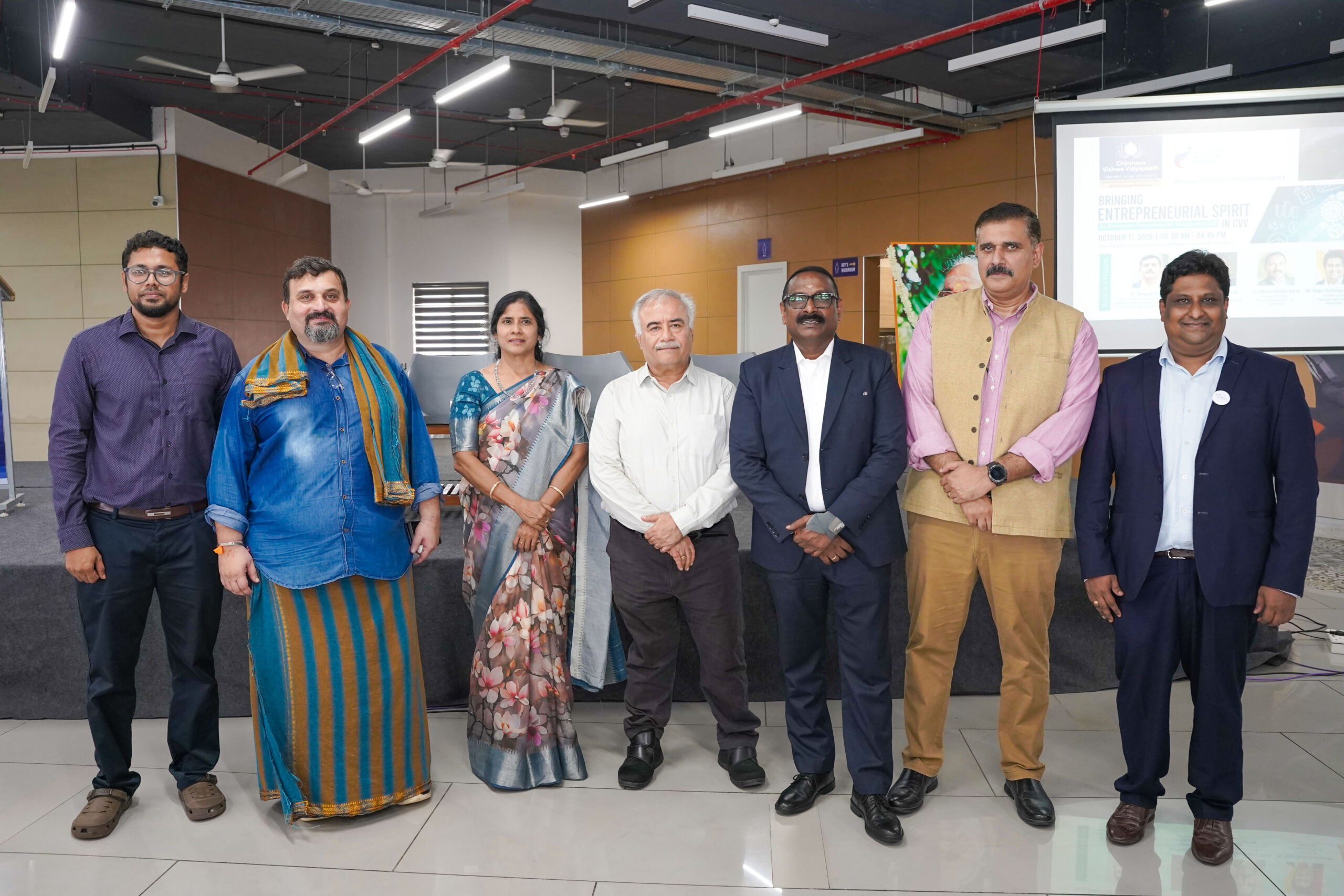
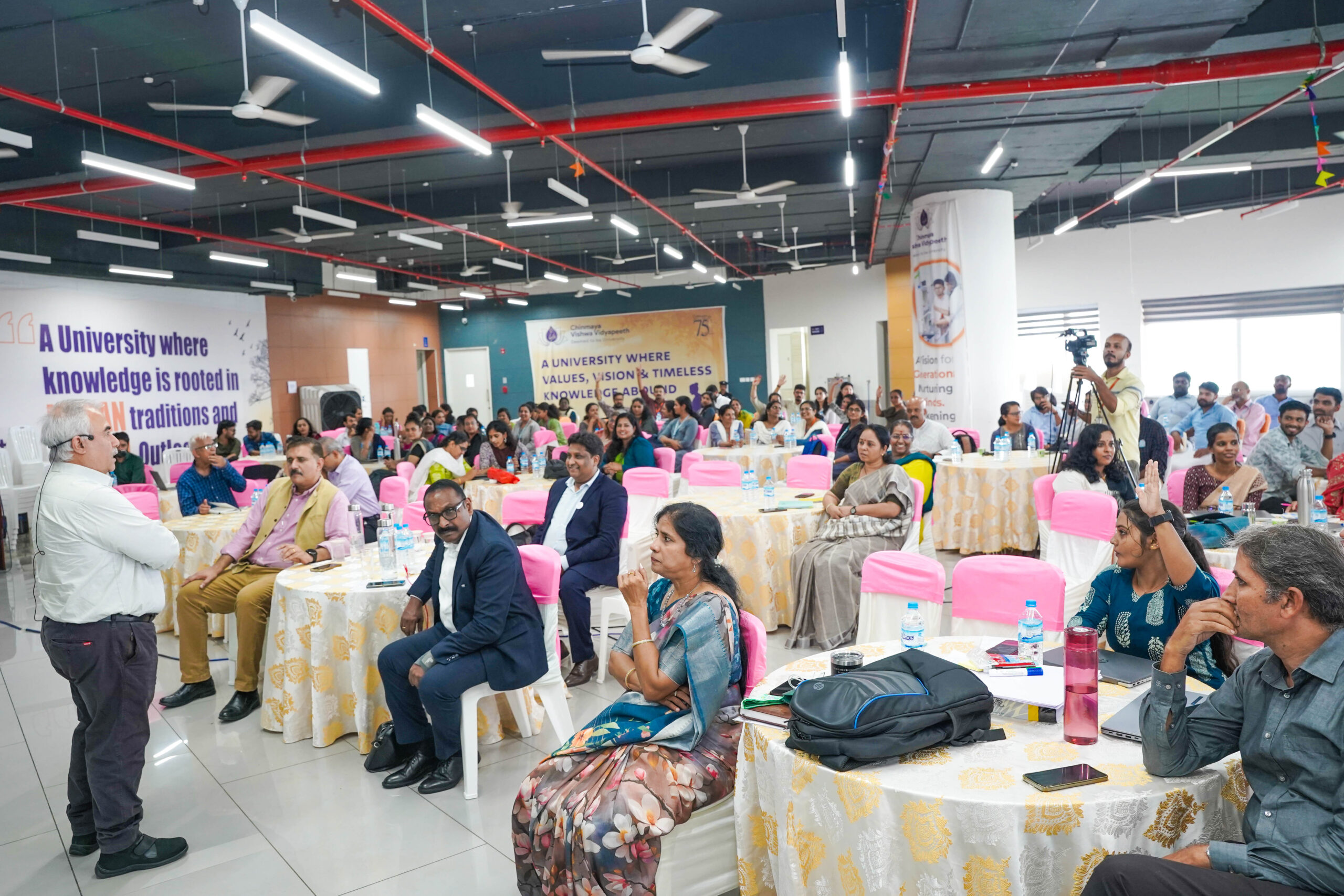
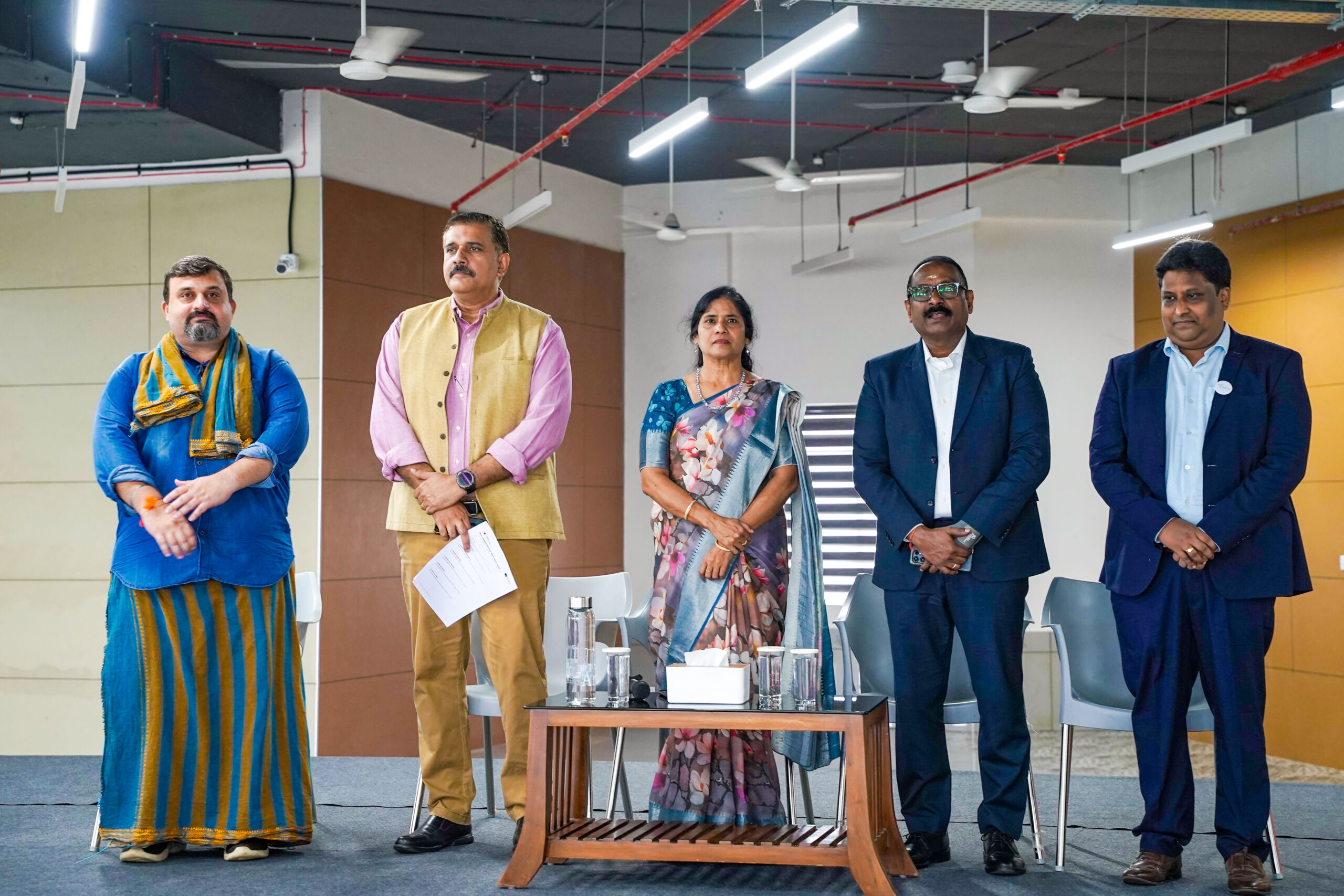
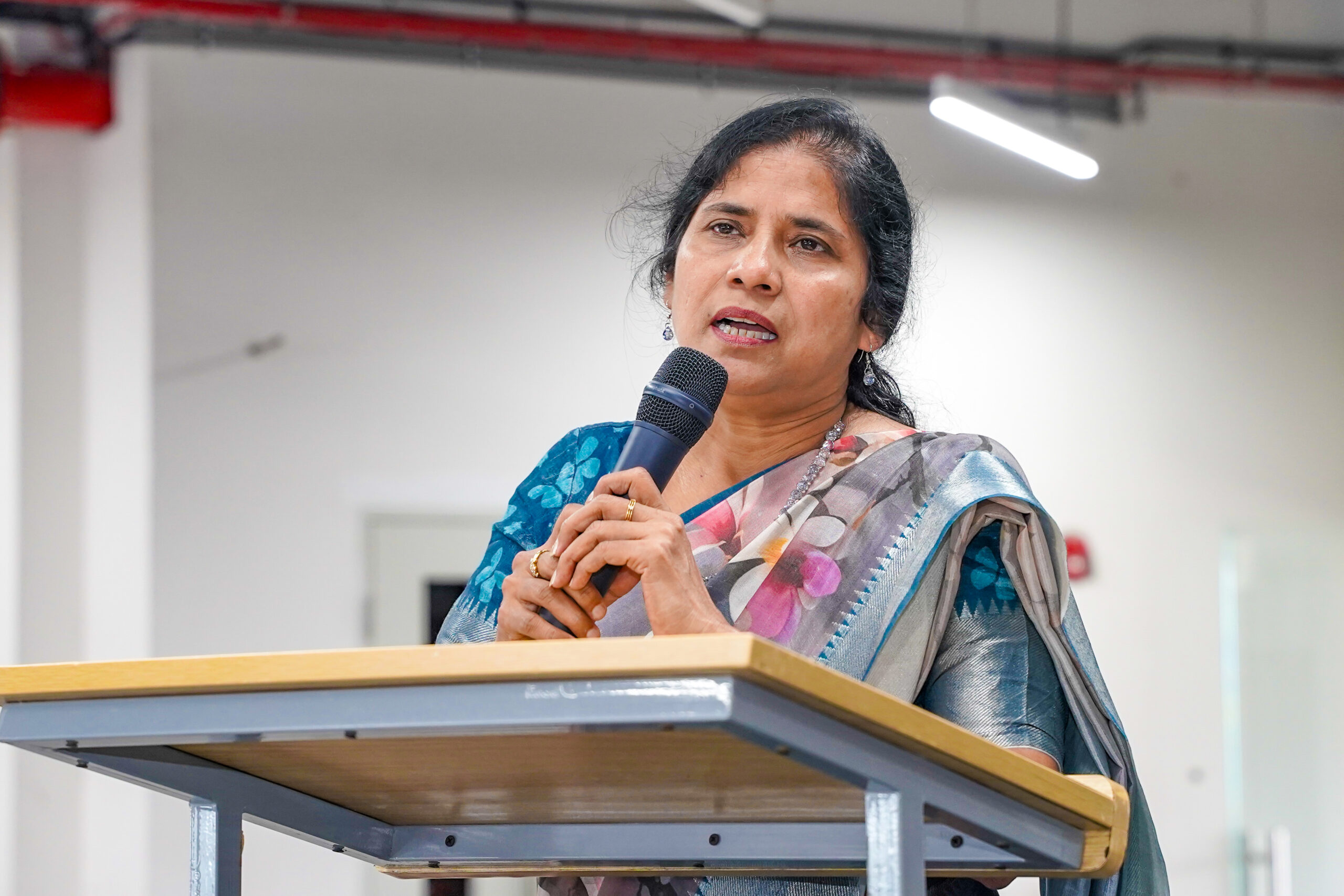
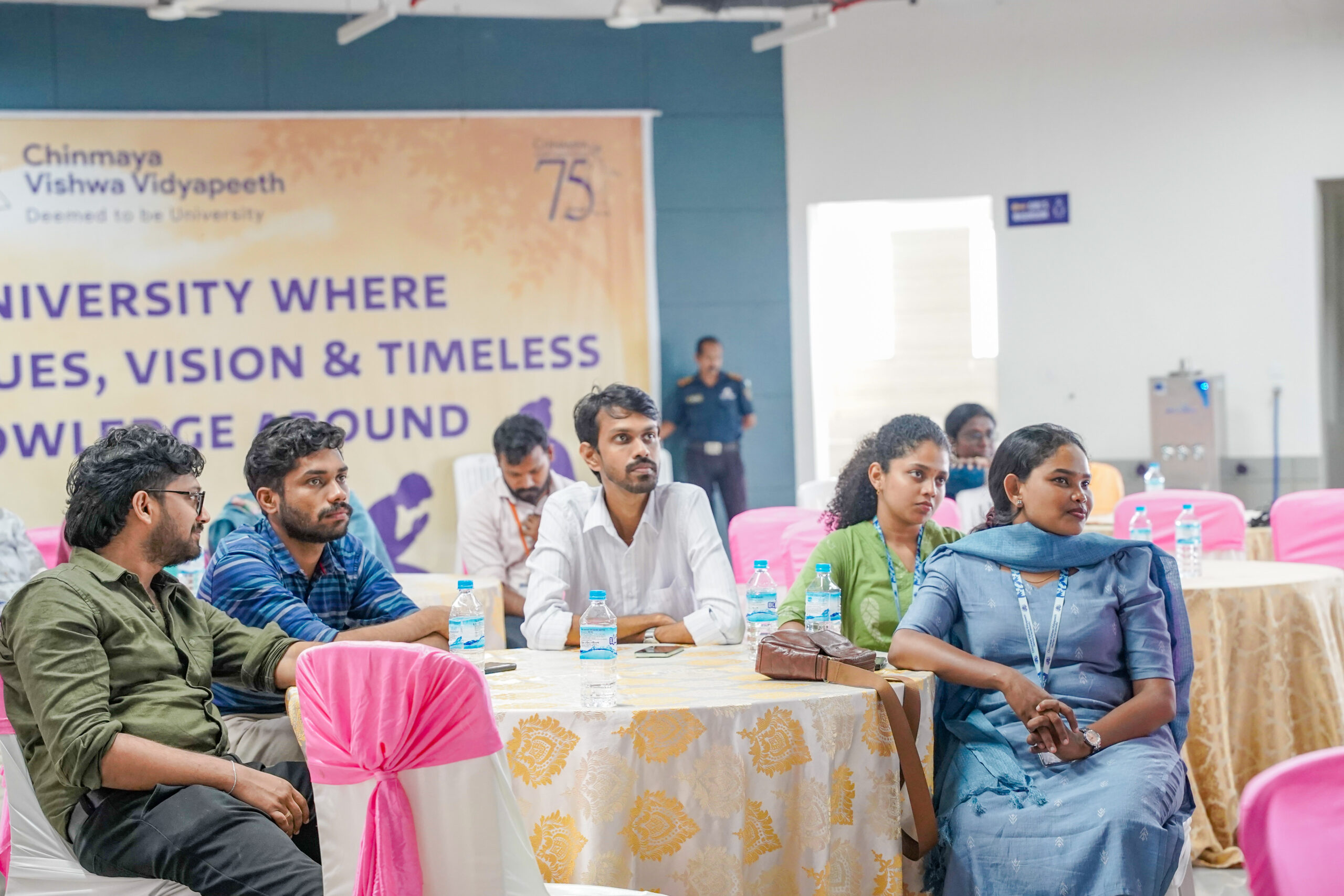
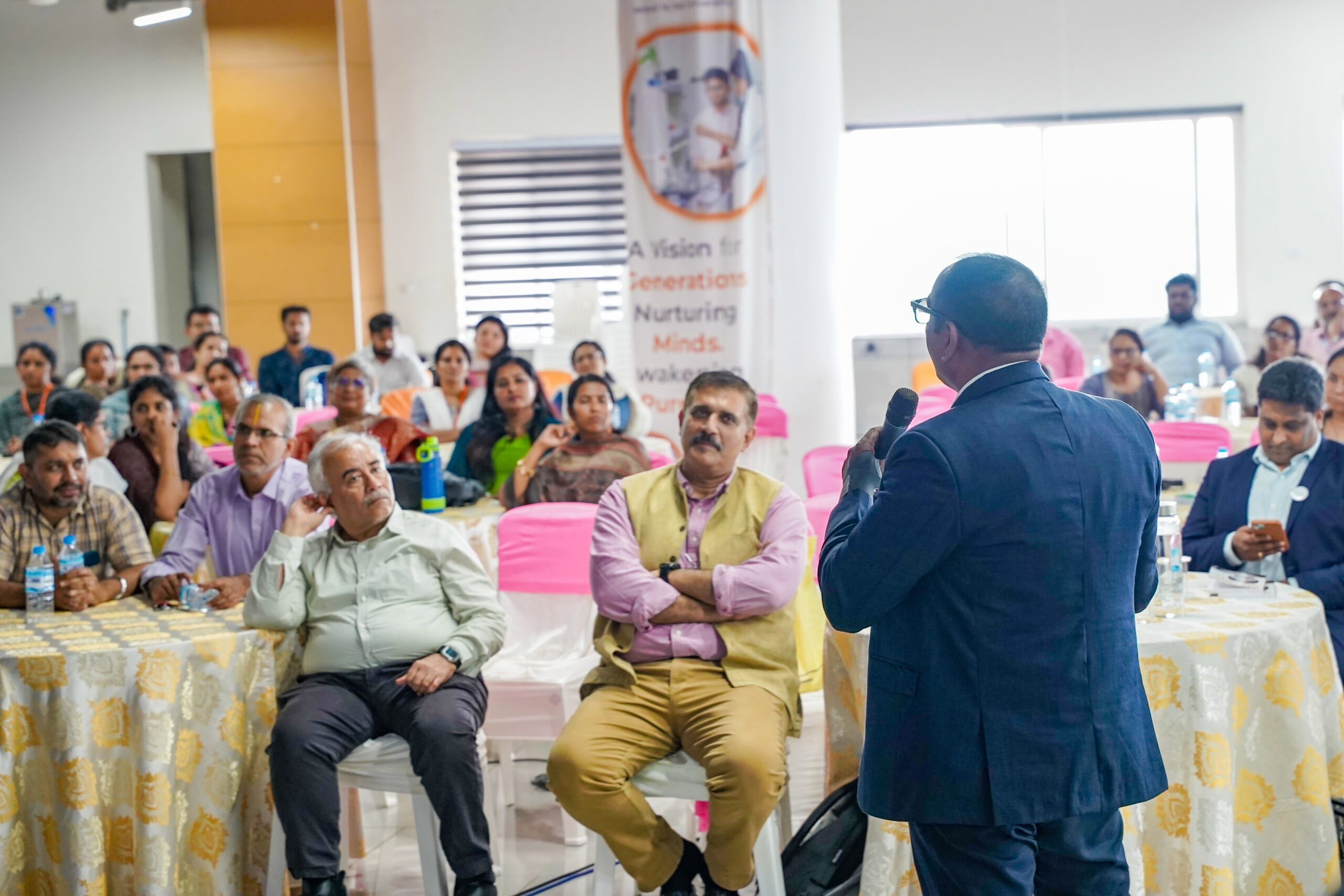
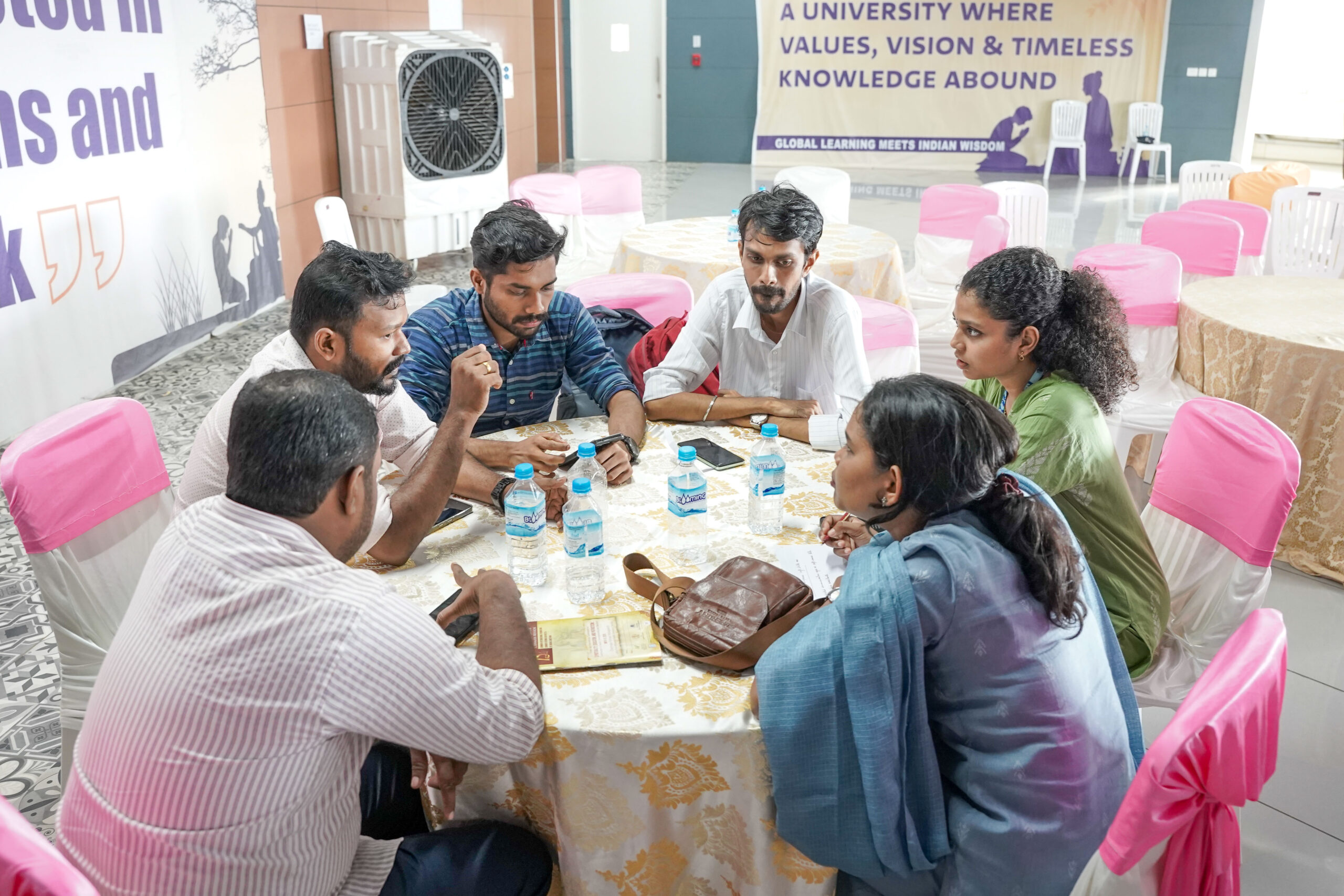
The Chinmaya VISHISHT 360 Incubation Centre organised a one-day orientation programme, “Bringing Entrepreneurial Spirit in CVV,” on October 17, 2026 at Annakshethra. Held in hybrid mode, the programme brought together 135 faculty and staff, with 124 attending in person and 11 joining online, to build an entrepreneurial mindset across the university.
Dr. S Glory Swarupa, Dean IEER, opened the day with “Unlearning and Re-Learning,” using the story of the eagle’s renewal to show that staying relevant means shedding old habits and embracing new ways of thinking.
The Honourable Vice Chancellor, Prof. Dr. Manoj Kumar Arora, emphasised that entrepreneurship belongs in every course, not only in management or technology, and urged faculty to bring real-world entrepreneurial problem statements into their teaching.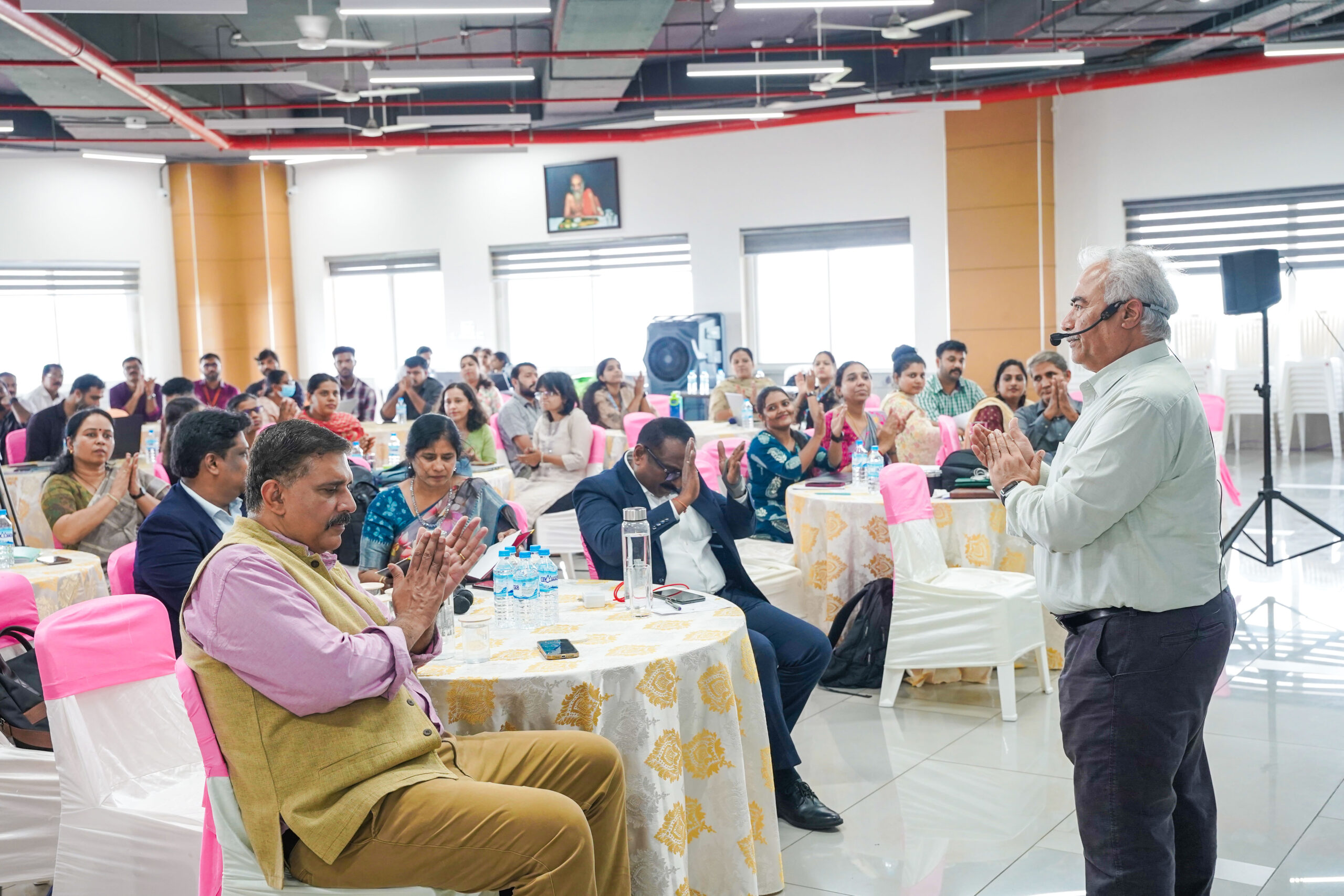
Four distinguished resource persons led the technical sessions. Dr. Chetan J Shirnali, General Partner, Co-Create Ventures, and Jury, ELEVATE, Government of Karnataka, spoke on the startup mindset and smart funding strategies, stressing that every venture begins with a meaningful problem and that funding follows evidence. He proposed a 90-day innovation sprint for CVV. Prof. Deepak Pandit, Chair Professor and Head of the Institute of Innovation & Entrepreneurship, BML Munjal University, explained how universities can keep good student projects alive through an “Idea-to-Impact Passport” and clear ownership of next steps. Dr. Bhanu Reddy Varla, Partner & Director, Plural Technology Pvt. Ltd., Hyderabad, outlined India’s startup opportunity and the key role faculty play in turning students from job seekers into job creators. Dr. Naga Chaitanya, Founder & CEO, TriQuanta Labs Pvt. Ltd., Hyderabad, introduced quantum computing and AI-enabled technologies and invited CVV to set up a quantum lab on campus.
The afternoon turned ideas into action. Faculty and staff formed teams of eight, each tackling The afternoon turned ideas into action. Faculty and staff formed teams, each tackling a real challenge from campus life, and pitched their solutions to the resource persons. Anna Dhara: From Our Fields to Your Plate proposed a farm-to-campus food supply chain linking local farmers and Kudumbashree groups through a student-built ordering app, with banana-leaf packaging and biogas from organic waste. Smarter Parking, Safer Movement suggested zoned parking, one-way routes, pedestrian walkways and a phased move to sensor-based digital parking.
Faculty-Led Startup Promotion Initiative set out a mentorship programme, workshops, an idea competition and industry tie-ups, aiming to launch at least one faculty-mentored startup this academic year. Echo Reduction in Atrium Buildings recommended acoustic panels, ceiling baffles, curtains and improved speaker systems for clearer lectures and events.
AI-Assisted Communication Skills Practice proposed an AI chatbot and voice assistant, integrated into the university’s SMS platform, to help students practise public speaking, presentations, group discussions and interviews at no extra cost. The AI scores each session, faculty assign their own marks, and the final score is the average of both, blending data-driven evaluation with human mentoring. Several of these practical proposals can be taken forward as pilot projects through the Incubation Centre.
In the concluding session, Dr. Vidyeswari shared feedback on behalf of participants, noting that the AI era offers new support and opportunities for entrepreneurship, and that this is the right time for faculty to nurture an entrepreneurial mindset in every student.