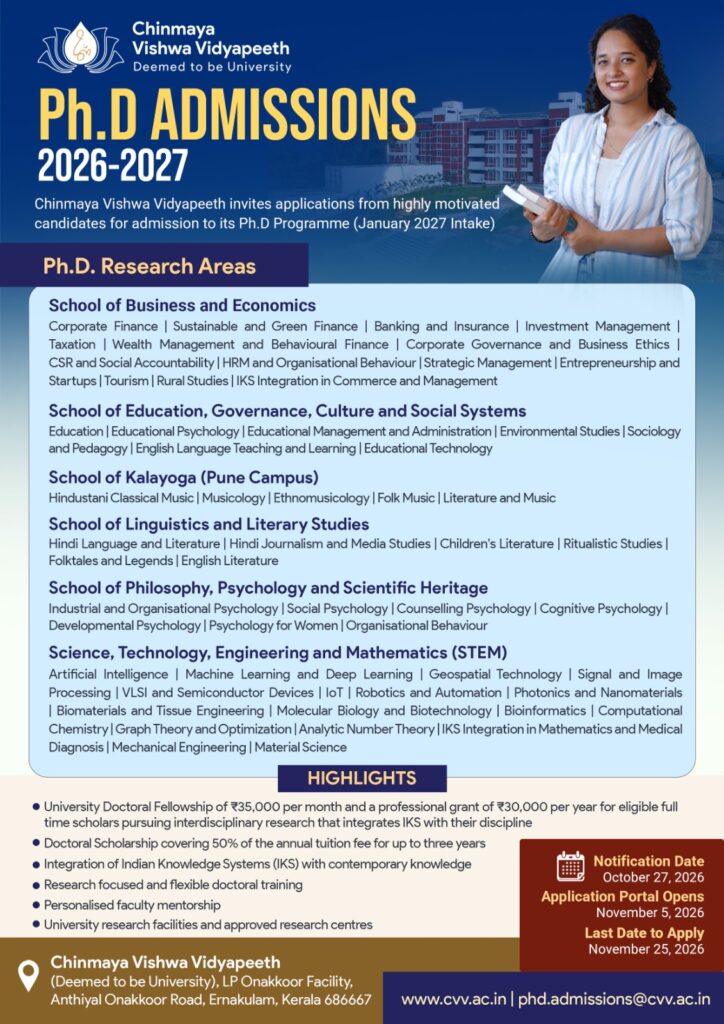
Ph.D ADMISSIONS
2026-27
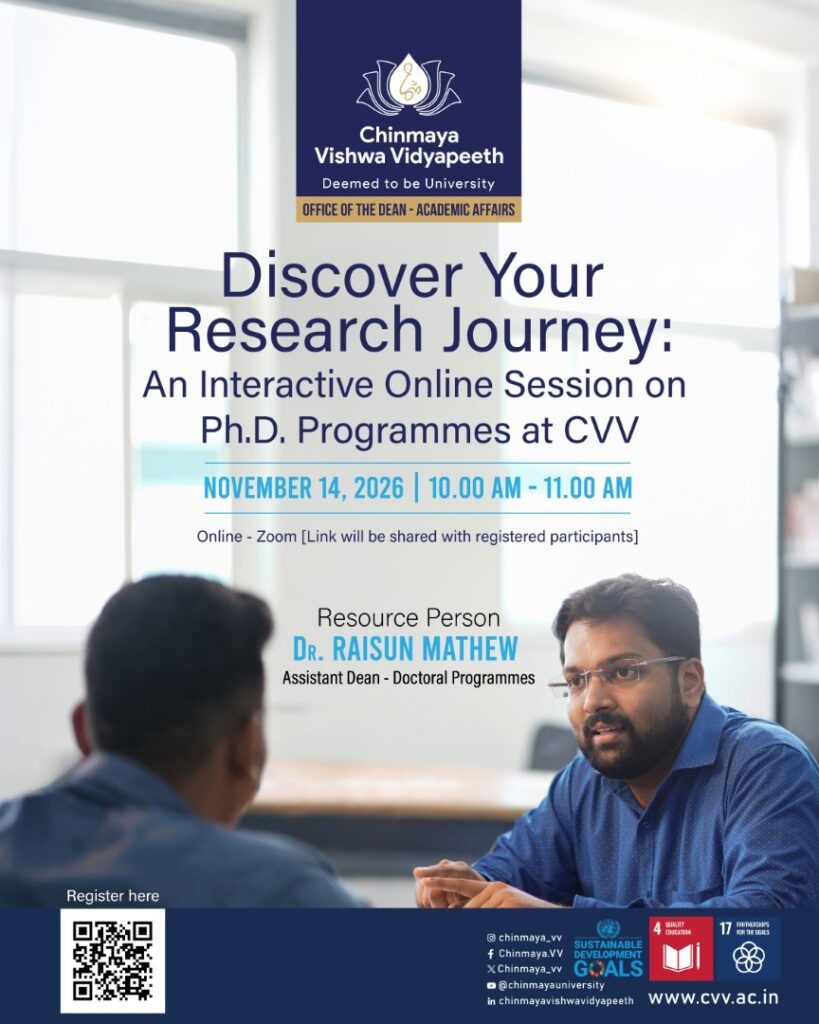
Chinmaya Vishwa Vidyapeeth invites applications from highly motivated candidates for admission to its Ph.D Programme (January 2027 Intake)
Ph.D. ADMISSION 2026–27 (JANUARY 2027 SESSION) – NOTIFICATION
Ph.D. APPLICATION 2026-27 FLYER (JANUARY INTAKE)
WHY CHINMAYA VISHWA VIDYAPEETH?
- Promotes rigorous research by integrating contemporary academic knowledge with the wisdom of Indian Knowledge Systems (IKS)
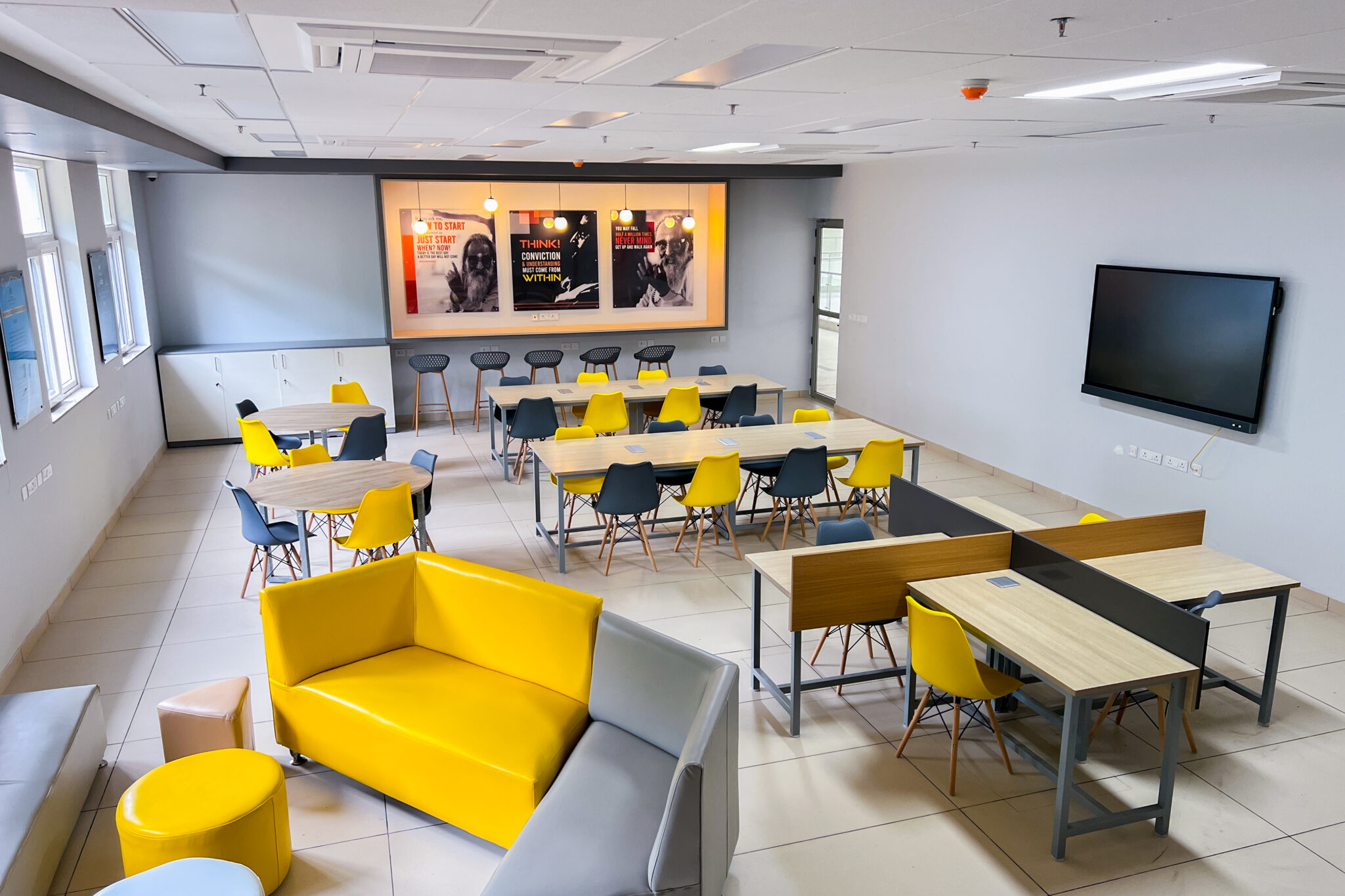
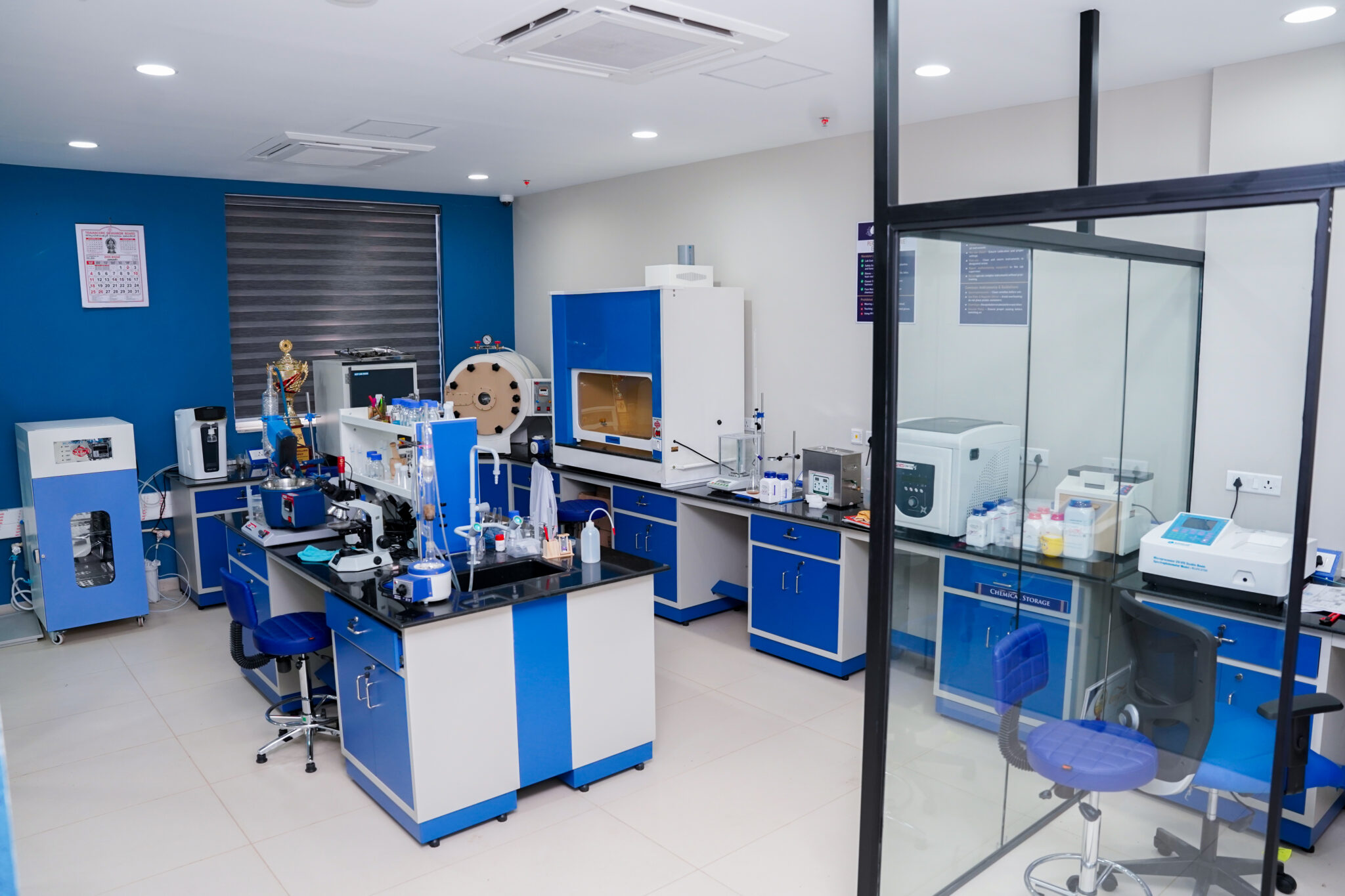
- Vibrant research environment and state-of-the-art facilities
- Highly qualified and resourceful faculty supervisors
- Memoranda of Understanding (MoUs) with reputed research centres and organisations
- Several funded projects sponsored by government and private organisations
- Centres of Excellence and collaborations with organisations of high research quality
RESEARCH CENTRES
- Centre of Excellence for IKS-CKS Integration and Innovation
- Centre of Bio-materials and Sustainable Chemistry
- AI Innovation and Research Centre
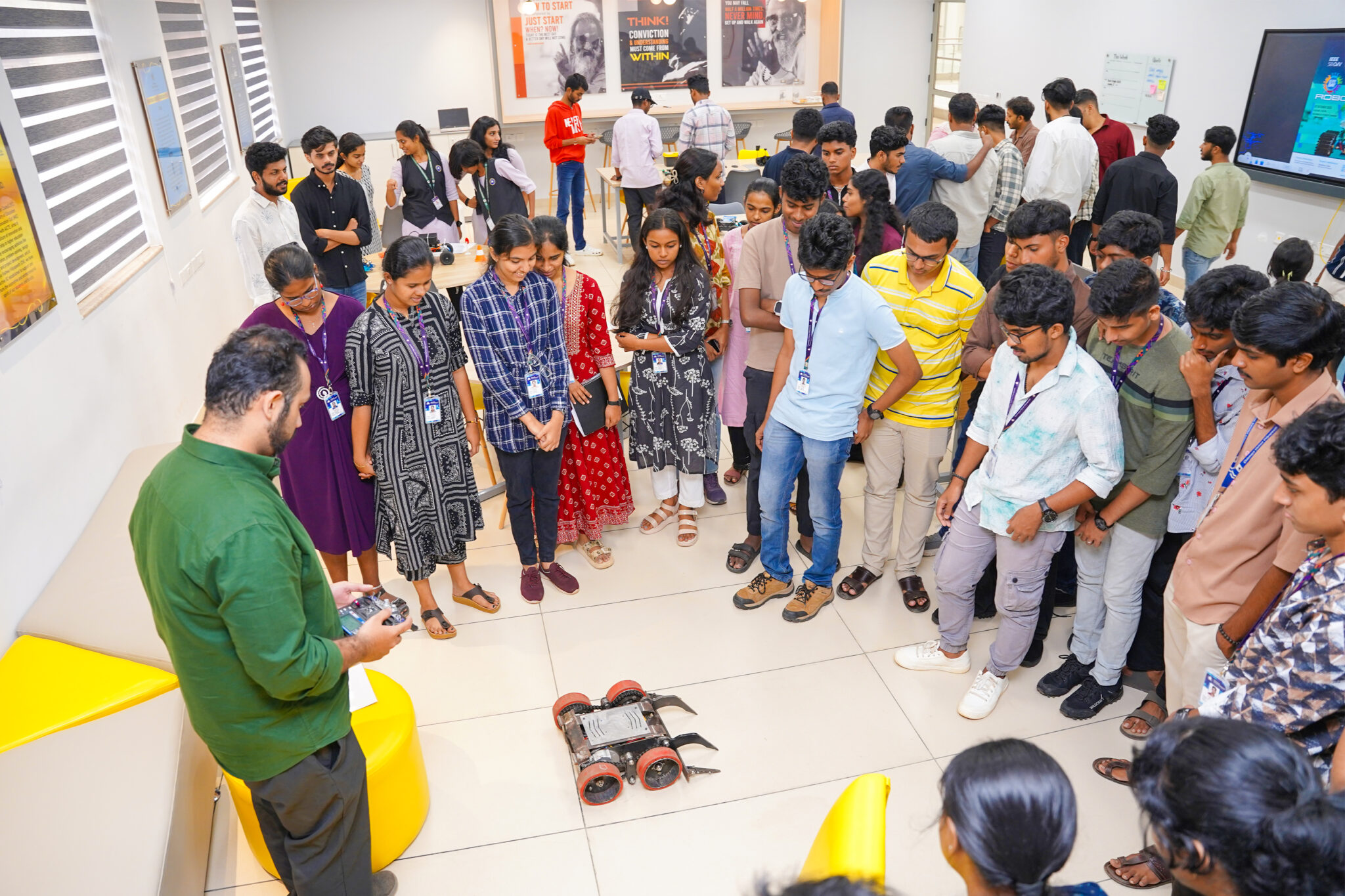
- Robotics and Automation Research Centre
- Centre for Optics and Photonics
CVV Approved Research Centre : Pushpagiri Research Centre (PRC), Tiruvalla, Kerala
FACULTY SUPERVISORS AND RESEARCH AREAS
School of Business and Economics
| S.No | Name | Designation | Vacancy | Research Area |
|---|---|---|---|---|
|
1 |
Prof. Manjula R. Iyer |
Professor |
5 |
CSR, Social Accountability, Corporate Governance, Innovative Business Practices, IKS integration in Commerce and Management
|
|
2 |
Dr. Abha Mohan
|
Associate
Professor
|
4 |
Corporate Finance, Sustainable Finance, IKS Integration Studies in Commerce & Management
|
|
3 |
Dr. Ambily A. S.
|
Associate
Professor
|
4
|
HRM, OB, Strategic Management, Rural Studies, Finance, Management Domains
|
|
4 |
Dr. Renju
Chandran
|
Assistant
Professor
|
3
|
Green Finance, Sustainable Finance, Banking, and Insurance |
|
5 |
Dr. Sanitha A.C.
|
Assistant
Professor
|
3 |
Financial Analysis & Investment Management, Corporate Taxation & International Taxation, Wealth Management & Behavioural Finance, Cost Management & Accounting Practices, Financial Regulations & Compliance
|
|
6 |
Dr. Veena M.
|
Assistant
Professor
|
3 |
Corporate Governance, Business Ethics, CSR, Sustainability, Management, Leadership, HRM, OB
|
|
7 |
Dr. Rakhy K. S.
|
Assistant
Professor
|
3 |
Human Resource Management, Organisation Behaviour, Occupational Psychology
|
|
8 |
Dr. Sanjith S R
|
Assistant
Professor
|
3 |
Finance, Stock Market Operations, Financial Management, Human Resource Management, Tourism, Entrepreneurship and Startups |
School of Education, Governance, Culture and Social Systems
| S.No | Name | Designation | Vacancy | Research Area |
|---|---|---|---|---|
|
1 |
Dr. Pramod
Dinakar
|
Associate
Professor
|
3 |
Education, Educational Psychology, Educational Management & Administration, Interdisciplinary Studies
|
|
2 |
Dr. Bindu M. P.
|
Associate
Professor
|
5 |
Education – Environmental Studies, Sociology & Pedagogy
|
|
3 |
Dr. Nikhitha Raju
|
Assistant
Professor
|
4
|
Education, English Language Teaching & Learning, and Education Technology |
School of Kalayoga
| S.No | Name | Designation | Vacancy | Research Area |
|---|---|---|---|---|
|
1 |
Dr. Swapnil Chandrakant Chaphekar
|
Associate
Professor
|
1 |
Hindustani Classical Music, Musicology, Literature & Music, Folk Music, Interdisciplinary studies of Music, Ethnomusicology
|
|
2 |
Dr. Atul Kamble
|
Associate
Professor
|
0
|
Music in Performance & Music in Education |
School of Linguistics & Literary Studies
| S.No | Name | Designation | Vacancy | Research Area |
|---|---|---|---|---|
|
1 |
Dr. M. Sudarshan Chiplunkar |
Associate Professor |
0
|
Sanskrit Poetics, Manuscriptology |
|
2 |
L. Sampath Kumar
|
Associate
Professor
|
0
|
Sanskrit Literature
|
|
3 |
Dr. Rajnish Kumar Mishra
|
Assistant Professor
|
4
|
Hindi Language & Literature, Hindi Journalism & Media Studies
|
|
4 |
Dr. Raisun Mathew
|
Assistant
Professor
|
0
|
Identity, Gender, Diaspora Studies
|
|
5 |
Dr. Vishaka Venkat
|
Assistant
Professor
|
2 |
Children’s Literature, Ritualistic Studies, Folktales & Legends [English]
|
|
6 |
Dr. Smrithi M Venugopal |
Assistant
Professor
|
4 |
Adaptation Studies, Fan fiction/Popular Culture Narratives,
Cultural Studies, British Fiction (Bronte Studies),
Medical/Health Humanities, Environmental Humanities |
School of Philosophy, Psychology and Scientific Heritage
| S.No | Name | Designation | Vacancy | Research Area |
|---|---|---|---|---|
|
1 |
Dr. Satheesh Varma
|
Associate Professor |
1 |
Industrial & Organizational Psychology
|
|
2 |
Dr. Susan Varghese
|
Assistant Professor
|
0
|
Organisational Behaviour
|
|
3 |
Dr. Sheron K. P. R. |
Assistant Professor
|
0
|
Clinical Psychology, Educational Psychology, Cultural Psychology, Cognitive Psychology
|
|
4 |
Dr. Sarath P.
|
Assistant
Professor
|
1
|
Social Psychology, Organisational Behaviour, Counselling Psychology, Cognitive Psychology
|
|
5 |
Dr. Ammu G. Nair
|
Assistant Professor
|
3 |
Developmental Psychology, Psychology for Women, Perimenopause, Education
|
|
6 |
Dr. Anupama S. R.
|
Assistant Professor
|
0
|
Indian Psychology, Music and Art Psychology, Positive Psychology, Health Psychology, Sports Psychology, General Psychology
|
Science, Technology, Engineering and Management (STEM) – CSE/AIE/CS/ASM
| S.No | Name | Designation | Vacancy | Research Area |
|---|---|---|---|---|
|
1 |
Prof. (Dr.) Manoj Kumar Arora
|
Professor
|
8 |
Geospatial Technology and its applications, Digital Image
Classification, Land Cover Mapping, Machine Learning
|
|
2 |
Dr. Anand H. S.
|
Associate
Professor
|
4 |
Algorithms, Nature Inspired Computing, Artificial Intelligence, Machine Learning, Health Informatics, Data Mining, Optimization, Application Development |
|
3 |
Dr. Bindusree A. R. |
Associate
Professor
|
4 |
Graph Theory, Optimization, IKS–CKS Integration in Mathematics |
|
4 |
Dr. Savitesh
Madhulika Sharma
|
Professor
|
7
|
VLSI, Semiconductor Devices, Nanoelectronics, IoT, Image Processing, CNT, FinFETs, Robotics & Automation |
|
5 |
Dr Praveen K. M.
|
Associate
Professor
|
5 |
Composite Materials, Nanomaterials, Biomaterials, Plasma Surface Modification, Tissue Engineering, Regenerative Medicine
|
|
6 |
Dr Shiju E.
|
Assistant
Professor
|
3 |
Photonics, Nonlinear Optics, Nanomaterials, Metamaterials |
|
7 |
Dr. Uma
Narayanan
|
Assistant
Professor
|
1 |
Security & Privacy, Machine Learning, Deep Learning |
|
8 |
Dr. Resmi N.G.
|
Assistant
Professor
|
3 |
Image Processing, Machine Learning, Deep Learning |
|
9 |
Dr. Arya Chandran
|
Assistant
Professor
|
4 |
Analytic Number Theory (Ramanujan sums and its
generalization, GCD sum identities, Asymptotic formulas related to Ramanujam sum and related Problem)
|
|
10 |
Dr. Josna James
|
Assistant Professor
|
4
|
Graph Theory, Fuzzy Mathematics, Intuitionistic Fuzzy Sets, Intuitionistic Fuzzy Optimization, Differential Equations, Algebraic Graph Theory
|
|
11 |
Dr. KRN Aswini
|
Assistant Professor
|
4
|
Medical Image Processing, IKS-CKS Integration in Medical Diagnosis, Cognitive Sciences, Digital Signal Processing
|
|
12 |
Dr. Reshma S
|
Assistant Professor
|
4
|
Reaction Mechanisms, Catalytic Pathways, DFT Studies, Computational Studies, Reaction Energetics, Transition Metal Catalysis
|
|
13 |
Dr. Suvanish Kumar
|
Assistant Professor
|
4
|
Molecular Biology, Genetic Engineering, CRISPR-Cas 9, Biotechnology, Bioinformatics, Mammalian Cell and 3D Printing, Systems Biology
|
|
14 |
Dr. Anupama Jims
|
Assistant Professor
|
4
|
Zooplankton detenction and monitoring device, Oceanic AI, Coral monitoring, Algal bloom detection, Ocean digital Twin, Climate change
|
|
15 |
Dr. Archana Babu
|
Assistant Professor
|
4
|
Topology, Homology, Fractals, Graphs, Hypergraphs
|
|
16 |
Dr. Neha Elizabeth Thomas
|
Assistant Professor
|
4
|
Analytic Number Theory, Ramanujan Sums, Generalized Ramanujan Sums, Dirichlet L-function
|
|
17 |
Dr. Akhila M S
|
Assistant Professor
|
4
|
Algebraic Combinatorics and Combinatorial Algebra, Graphs Associated with Algebraic Structures, Spectral Graph Theory, Metric Dimension, Graph Theory, Commutative Algebra.
|
|
18 |
Dr. Soumya Haridas
|
Assistant Professor
|
4
|
Image Processing, Deep Learning, Machine Learning, Artifical Intelligence
|
|
19 |
Dr. Robin George
|
Assistant Professor |
4 |
Wireless Sensor Network, Microwave Engineering and Antenna Design, Optimization Algorithms, Internet of Things, Digital Signal Processing
|
|
20 |
Dr. Shyama S |
Assistant Professor |
4 |
Graph Theory, Graph Coloring, Domination in graphs |
ELIGIBILITY CRITERIA
- Master’s degree in the relevant subject with at least 55% marks in aggregate or its equivalent grade
- 4 year/ 8 semester bachelor’s degree with minimum 75% marks in aggregate or its equivalent grade are eligible for direct admission
For admission to the PhD programme in Psychology, an MA/M.Sc. in the concerned subject obtained through regular mode is mandatory
Ph.D. ADMISSION CATEGORIES
The Ph.D. programme spans a minimum of 3 years and a maximum of 6 years, in accordance with the UGC Ph.D. Degree Regulations 2022.
CATEGORY 1: Full-time
- Full-time scholars are expected to reside on campus or commute daily for research
activities.
- Full-time scholars are expected to reside on campus or commute daily for research
CATEGORY 2: Part-time
- Professionals employed in relevant fields may apply for part-time Ph.D. study.
- A no-objection certificate from the employer is mandatory.
Ph.D. ENTRANCE EXAMINATION SYLLABUS 2026–27
Ph.D. GUIDELINES 2026-27
Guidelines for PhD Admission 2026-27
Doctor of Philosophy (PhD)
Adi Sankara Nilayam, Adi Sankara Marg, Veliyanad
Ernakulam – 682313, Kerala, India
1. Preamble
Chinmaya Vishwa Vidyapeeth (Deemed to be University) is committed to advancing research and higher education through the integration of Indian Knowledge Systems (IKS) with contemporary academic disciplines. The Ph.D. programme represents the highest level of academic engagement, aimed at encouraging original research, interdisciplinary inquiry, and socially relevant scholarship. In alignment with the latest regulations of the University Grants Commission, these guidelines provide a structured framework ensuring academic excellence, ethical research practices, and quality standards while promoting a supportive research environment.
2. Admission
The admission is open for the following disciplines and sub-fields:
Disciplines with # Areas / Fields
*Interdisciplinary Research on Indian Knowledge Systems (IKS) with:
- Psychology
- Languages
- Education
- Computing
- Artificial Intelligence and Machine Learning
- Material Science
- Mathematics
- Commerce and Economics
- Management, Leadership and HR
- Consciousness Studies & Vedanta
- Music
Commerce & Management
- Corporate Governance, Corporate Social Responsibility (CSR), Business Ethics, and Social Accountability
- Finance and Accounting: Financial Analysis, Investment Management, Corporate Finance, Corporate Taxation, International Taxation, Wealth Management, Cost and Management Accounting, Financial Regulations and Compliance
- Sustainable and Green Finance: Green Finance, Sustainable Finance, Behavioral Finance, Banking and Insurance
- Management and Strategy: Strategic Management, Leadership, International Finance
- Human Resource and Organizational Studies: Human Resource Management, Organizational Behaviour, Occupational Psychology
- Marketing and Business Practices: Marketing Management, Innovative Business Practices
- Rural and Development Studies: Rural Studies, Sustainable Development
Sanskrit(Darsana, Sanskrit Literature, Aesthetics & Poetics in Sanskrit, Sanskrit Manuscriptology) Sanskrit Grammar – Paninian Studies
- Darsana – Sankhya Darsana, Yoga Darsana
- Sanskrit Literature – Vedic Literature, Classical Literature, Modern Literature
- Aesthetics & Poetics – Rasa Studies, Alankara Studies
- Manuscriptology – Critical edition of unpublished Sanskrit manuscripts
Hindi
- Hindi Language and literature
- Hindi journalism and media studies
English
- Children’s literature, ritualistic studies and folktale and legend literature
Engineering and Technology
- Artificial Intelligence and Data Science: Artificial Intelligence, Machine Learning, Deep Learning, Data Mining, Optimization, Health Informatics, and Development of New Applications.
- Security and Privacy
- Algorithms and Nature-Inspired Computing
- Natural Language Processing: Natural Language Processing, Semantics, and Computational Linguistics.
- Image Processing and Computer Vision
- Electronics and Embedded Systems: VLSI, Semiconductor Devices, Nanoelectronics, Internet of Things (IoT), Carbon Nanotubes (CNT), FinFETs,Robotics, and Automation.
- Advanced Materials and Biomedical Engineering: Composite Materials, Nanomaterials, Biomaterials, Plasma Surface Modification, Tissue Engineering, and Regenerative Medicine.and legend literature
Engineering Sciences
- Biotechnology, Bioinformatics, Materials science, Life sciences
Education
Educational Psychology, Educational Management and Administration
Education- Environmental Studies, Sociology pedagogy
Education, English Language Teaching & Learning, and Education Technology
Mathematics Education
Mathematics
- Graph theory, Optimization
- Analytic Number Theory (Mainly, elementary arithmetic functions, Ramanujansums and its generalization)
- GCD sum identities, Asymptotic formulas related to Ramanujan sum and relatedproblems
Psychology
- Social Psychology, Organizational Behaviour, Counselling Psychology, Cognitive Psychology
Music
- Hindustani Music – Tabla
- Hindustani Classical Music
- Musicology
- Folk Music
- Ethnomusicology
*Suitable candidates will be eligible for fellowships.
# The listed areas/fields are indicative and not exhaustive. Other related areas, subject toapproval of the School/ Department/ Centre Selection Committee will also be considered.
3. Eligibility for Admission
The Ph.D. Programme shall be offered under the following categories, subject to the availability of approved Research Centres, recognised Research Supervisors, and requisite infrastructure in the concerned discipline:
1. Full-Time Research Scholar
A Full-Time Research Scholar is a candidate who:
- Is registered for the Ph.D. programme on a full-time basis; and
- Carries out research work primarily at the University campus or its approved Research Centres.
2. Part-Time Research Scholar
A Part-Time Research Scholar is a candidate who:
- Is employed in an organisation such as a Research Institution, Educational Institution, Industry, or other organisation recognised by the University; and
- Is permitted to pursue the Ph.D. programme on a part-time basis, subject to the approval of the University.
Part-Time Research Scholars shall:
- Fulfil the minimum residency requirements as prescribed by the University;
- Submit a No Objection Certificate (NOC) from the employer at the time of application and prior to admission;
- Ensure availability of adequate time and facilities for pursuing research. Provided that, the minimum residency requirement may be waived or suitably relaxed for candidates working within a radius of 100 km from the University campus, subject to approval by the competent authority.
Eligibility Criteria
The following are eligible to seek admission to the PhD programme:
- Candidates who have completed 1-year/2-semester master’s degree programme after a 4- year/ 8-semester bachelor’s degree programme or a 2-year/4-semester master’s degree programme after a 3-year bachelor’s degree programme or qualifications declared equivalent to the master’s degree by the corresponding statutory regulatory body, with at least 55% marks in aggregate or its equivalent grade in a point scale wherever grading system is followed.
- Candidates who have completed a 4-year/8-semester bachelor’s degree programme should have a minimum of 75% marks in aggregate or its equivalent grade on a point scale wherever the grading system is followed. These candidates shall be considered as Direct Admission to PhD programmes after their UG degree.
- Candidates who have completed the M.Phil. programme with at least 55% marks in aggregate or its equivalent grade in a point scale wherever grading system is followed.
- For international students, the candidate must submit well-documented proof that the qualifying for a master’s degree earned by him/ her in the international university, is equivalent to that of an Indian master’s degree from Association of Indian Universities and/ or Internal Committee constituted by the University for this purpose. The international students from the non-English speaking countries need to undergo a 3-month bridge programme in English Language before they start their research work in the university.
- For part-time research scholars, an NOC from employing organization regarding the candidate’s registration for PhD programme at CVV is required to be submitted at the time of application and certainly before the admission to the said programme in the university.
- A relaxation of 5% marks or its equivalent grade may be allowed for those belonging to SC/ST/OBC (non-creamy layer) /Differently Abled, Economically Weaker Section (EWS) and other categories of candidates as per the decision of the Commission from time to time.
4. Admission Process
- The candidate must apply online for admission to PhD program using link available on the CVV website.
Refer: https://www.cvv.ac.in/study-program/doctoral-phd-programmes - The selection of candidates for the Ph.D. programme is carried out through a two-stage admission process.:
- In the first stage, an entrance test will be conducted. The test could be descriptive or MCQ or a combination of both as mandated by the school/department/centre. 50% weightage will be given to research methodology and the rest 50% to core/discipline specific subjects. For a candidate with inter-disciplinary background, the subject specific portion will be decided by the school/department/centre accordingly. Candidates must secure at least 50% marks in the entrance test to become eligible for the interview.
Note: Candidates who have qualified UGC-NET (Lectureship)/ CSIR – NET, valid GATE scores are exempted from the entrance test.
- In the second stage, candidates will be called for a personal interview.The Selection Committee will decide on the number of eligible candidates to be called for an interview as follows:
- An interview will be conducted where the candidates are required to discuss their research interests/areas through a presentation before the committee.
- The interview should also consider the following aspects, viz. whether:
- The candidate possesses competence for the proposal research
- The research work can be suitably undertaken
- The basic knowledge related to proposed area of research.
- The candidate’s motivation for research.
- The merit list for the selection will be prepared based on candidate’s marks in previous degrees, performance in the entrance test and interview. The weightage may vary from school to school or department to department or centre to centre. Wherever entrance test is exempted, its weightage will be added to the weightage of Interview component.
- The list of selected candidates will be published on the university website
- In the second stage, candidates will be called for a personal interview.The Selection Committee will decide on the number of eligible candidates to be called for an interview as follows:
4. Admission Process
ANNUAL Ph.D. PROGRAMME FEE / SCHOLARSHIP
| Annual PhD Programme Fee* | |
| Ph.D. Full-time Scholars | Rs. 60,000/- |
| Ph.D. Part-time Scholars | >Rs. 1,20000/- |
FELLOWSHIP
Scholarship: CVV Research Scholarship up to 50% for all PhD Scholars
University Doctoral Research Fellowship: Rs. 35000/- per month with a professional development grant of Rs. 30000/- per year for full-time scholars pursuing interdisciplinary research on integration of IKS with other disciplines.
Total Number of Doctoral Fellowships: 10
IMPORTANT DATES
Opening of Online Application Portal : 05 November 2026
Closing of Online Application Portal : 25 November 2026
Date of PhD Entrance Examination (In-person): 12 December 2026
Date of PhD Interview / Research Presentation (In-person) : 13 December 2026
Announcement of Entrance Test Results: 21 December 2026
PhD Verification and Academic Registration : 05 January 2027
PhD Orientation and Commencement of Coursework : 05 January 2027
**Candidate need to be present in-person at LP Onakkoor (Ernakulam) facility of CVV.
Ph.D. COURSEWORK
IMPORTANT DOCUMENTS FOR REFERENCE
CONTACT US
For more information about the Ph.D. programme, please contact us at phd.admissions@cvv.ac.in